-
Urgent! Please sign Petition today if you believe the oyster farm should stay!
"The farm was intended to be part of the Point Reyes National Seashore from the beginning and it was never our intention to evict them." - Pete McCloskey, Author of Point Reyes National Seashore Act, 1962.
If you agree that it should stay, please sign the simple petition below.
Peggy
From: Drakes Bay Oyster Farm <Drakes_Bay_Oyster_Farm@mail.vresp.com>
Subject: Last Chance to Save Drakes Bay Oyster Farm! Sign & Share the Petition!
Date: November 24, 2012 7:53:26 AM PST
In this season of Thanksgiving, we give thanks for you, dear supporters. To give you an update, this past Wednesday Secretary of the Interior, Ken Salazar, visited the farm and stated that he intends to make his decision by next week.
[Click here to watch a local news story about the visit]
More than ever, he needs to hear from you now. If you have already signed the petition, thank you, and please forward this email to your contacts one more time. If you haven’t signed the petition, it’s not too late!
Sincerely,
The Families of Drakes Bay Oyster Farm
Share the petition on
Facebook!
Tweet a
#SaveDBOC status message!
-
Secretary Salazar decided to evict oyster farm of 80 years.
It's been a sad day on the streets of Point Reyes Station as the news spreads that Salazar has told the oyster farm to cease operations TOMORROW! They have 90 days to clear out and make homeless and jobless the 30 dedicated employees, some of whom have been there 25 to 30 years.
It's so sad to me. The owners of the oyster farm were instrumental leaders in the 7 or 8 ranches on the Point Reyes Peninsula becoming the first group of organic ranchers in the country. Marin agricultural has been held as a model for the world of organic farming.
The oyster company could very well bring legal action against the National Park Service because of all the deceptive manipulation of the science, the 'last-minute' Environmental Impact report which left them no time at all to study the science (knowing the first EIR was replete with false science and the writers were censured by the National Academy of Science) and respond.
Or, they can lick their wounds, find other jobs and houses for the workers, and clean the oysters out of the bay. The oysters have a crucial function to the ecology of the bay as filter-feeders and the bay will go into shock when they are all dead or gone. It would take an estimated 100 years to replace them and the native oysters are suffering under the effects of ocean acidification and growing smaller and weaker. The neighboring ones in the Tomales Bay have this problem and those farmers were buying from the Lunny's to make ends meet.
Your oysters will now be flown to you -- at great financial and environmental cost -- from Korea and Japan.
This whole thing is sad to me. The Lunnys are humble, honest and generous souls. They do have other farming businesses including a new organic composting business that they can turn their energies to. Kevin Lunny's father, grandfather, great-grandfather and great-great-grandfather were some of the ranchers out on the point who shepherded the area and kept it from developers for a century. In 1962, the ranchers decided to give their precious land to the National Park Service in order to keep it pristine. That generosity seems lost in this moment.
____
I got into the television news production work (unpaid) because the lack of passion in other news bothers me. The disconnect of the anchor's voices with the tragedy they speak galled me. But, my internal sensitivity makes it harder to do stories like the interviews with the Lunny's. I can't be neutral about this and I wouldn't have it any other way.
Peggy, Producer, Seriously Now, MarinTV
-
Re: Secretary Salazar decided to evict oyster farm of 80 years.
Seriously Now this week. With the two Salazar meetings. https://vimeo.com/54496772.
-
Re: Urgent! Please sign Petition today if you believe the oyster farm should stay!
The time for petitions has passed. There were over 52,000 Public Comments on the Draft Environmental Impact Statement. 92% of these comments (nearly 48,000) urged the Secretary of the Interior to support the removal of the oyster farm and honor the long-time plan to protect Drakes Estero with a wilderness designation. Read the Santa Rosa Press Democrat editorial of today for an objective look at the decision. https://www.pressdemocrat.com/articl...st-oyster-farm
-
Re: Secretary Salazar decided to evict oyster farm of 80 years.
Well, I personally am quite pleased that the land will revert back to nature and become incorporated into the amazing ecosystem and magnificent setting of Pt. Reyes. This family knew, when they bought the oyster farm in 2004 that the lease would expire in 2012, pursuant to an act of Congress in 1976 to protect wilderness areas. Knowing this, they could have gradually phased out their operation and should have prepared themselves accordingly and perhaps provided training for their loyal employees to transition to another job. We need wild places in our world and Pt. Reyes is a truly spectacular, spiritual trigger point of the Earth that needs to remain so.
-
Re: Secretary Salazar decided to evict oyster farm of 80 years.
I think there is a problem with the modern concept of "wilderness" as a way to protect and save what remains of the diversity of life on this planet.
The human population is now so large, and so greatly impacting and decimating ecosystems left and right, it is misleading to think that setting aside limited "wilderness reserves" effectively preserves diversity.
Human activity needs to lessen and change so that the "preserving" happens where we live and work. In this sense at least, it sounds like the oyster farm might have been on a good course.
The natural world after all does include humans. But with 8 billion people here, and with the rapacious exploitation of nature driven by our wonderful capitalist system, species disappear faster than we can identify them and kiss them goodbye. With them goes a big part of our past and our future, a big part of who we are. In the longer view, official preserves may be only sad islands of illusion.
Quote:
Posted in reply to the post by sambacat:

Well, I personally am quite pleased that the land will revert back to nature and become incorporated into the amazing ecosystem and magnificent setting of Pt. Reyes. This family knew, when they bought the oyster farm in 2004 that the lease would expire in 2012, pursuant to an act of Congress in 1976 to protect wilderness areas. Knowing this, they could have gradually phased out their operation and should have prepared themselves accordingly and perhaps provided training for their loyal employees to transition to another job. We need wild places in our world and Pt. Reyes is a truly spectacular, spiritual trigger point of the Earth that needs to remain so.
-
2 Attachment(s)
Re: Secretary Salazar decided to evict oyster farm of 80 years.
Sambacat,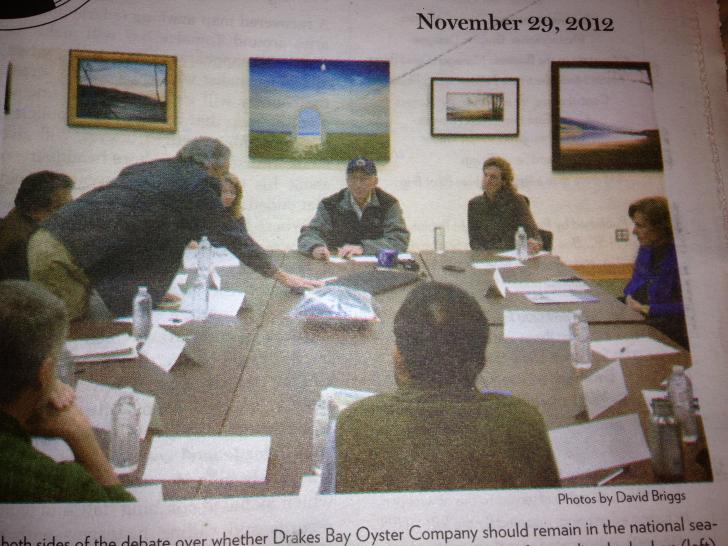
The owners are also ranchers on the point. All of the ranches out there have renewable leases. Until recently, there was no reason to believe that the oyster lease would not be renewed. A discussion with the NPS before the Lunny's took over the lease left the Lunny's with the impression that renewing the lease was not going to be a problem. THe NPS even published a book with a chapter about the oyster farm bragging about how sustainable it is about 4 years ago.
Plans were made with the NPS to create an educational center at the oyster farm. And, salazar said he is extending the leases for the beef ranches in the same statement that evicted the oyster farm.
The park, the sierra club and the environmental action committee published one hit piece after another in an attempt to evict the oyster farm. The first draft of the Environmental Impact Statement flew in the face of all the research that showed the farm was not causing environmental harm but actually the oysters are filter feeders and have increased the Eel Grass habitat for the fish many times over. The dEIS was censured by the National Academy of Sciences for the dEIS. That is a huge deal.
This last fEIR was supposed to be published 30 days before it was published -- at midnight the day the Salazar arrived -- 8 days before the decision. That alone gives the Lunny's room for a legal challenge.
I don't know if you've visited the farm or pt reyes, but I live here. The farm is kept clean and every measure to keep it environmentally sound has been taken. On the other hand, the park service has homes throughout the 'wilderness' for park employees. Roads are travelled by millions of visitors each year in gas-guzzling, oil spilling cars. I find plastic food-wrappers, diapers, tampax, cigarettes and plastic water bottles on the trails and beaches every time i hike (which is frequent). The park service races motor boats up and down the Tomales Bay several times per day. A bay where motor boats are prohibited except -- for the park, it's 'law enforcement'. I can only imagine those same boats racing through drakes bay, for 'law enforcement.'
the park has a kayak put-in beside the oyster farm and the kayakers have been captured on film many times interfering with the endangered harbor seals. the park plans to encourage more kayakers to come to drakes bay, once the oyster farm is eliminated. in 210,000 photographs the park took of the oyster operations, suruptitiously , there is not one photo of an oyster farm employee near the harbor seal habitat (250 yards away).
another point of view i have is after 42 years of hiking the same trails here in pt. reyes. the once narrow single file trails are 6 feet wide now with erosion all along the way. our local 'secret' mushroom trail now has mushrooms cut and strewn all along it -- for what purpose people are tearing them out to smash them, i can't fathom.
my point of view is that the nps has done much too much already to pt reyes. the killing of 1000 + fallow dear 4 years ago, bringing in 350 employees into this tiny community, etc. makes me doubt that you will ever find a natural landscape out here.
and, the clincher for me is that the so-called environmentalists (we all call ourselves environmentalists out here), or  wilderness-zealots, (as I prefer to call them), all had plastic bottles of water they were sipping from during the meeting with Salazar, all-the-while trying to convince him that they were the best environmentalists on this issue. One even stood up to hand salazar a plastic bag of plastic pieces he's pulled from the water near Drakes bay and leaned over his plastic drinking water bottle to do it. Salazar had just come from a meeting where an official with Fish and Game told him 100% of the plastic coming from the water is from the previous owner of the oyster farm -- he used different equipment and it could be identified.
to me, it seems that you may be parroting the w-z spin on the story. come out in the next 90 days (the Lunny's have an extension) and see for yourself. email me first and, if I can, i'll show you what i mean.
peggy
please forgive typing, i have a broken finger.
-
Please sign NEW Petition to Obama if you believe the oyster farm should stay!
The Lunnys are going to fight the great city hall. The press release is below. I just wish everyone could spend 5 minutes with any member of that family. I did my best to tell the story here:
https://vimeo.com/51319391
There is a new petition asking Obama to reverse Salazar's decision here:
https://petitions.whitehouse.gov/pet...tment/GXsMsG3p
Peggy
MARIN COUNTY, CA – Drakes Bay Oyster Company (DBOC) Owner Kevin Lunny announces today a continued effort to fight for his family’s business that was shut down by the National Park Service on November 30. Retaining the help of government accountability group Cause of Action as well as Stoel Rives LLP, DBOC released the following statement today from Kevin Lunny:
“We have been a dedicated small family farm for four generations in the West Marin community and when we purchased Drakes Bay Oyster Company seven years ago, we saw an opportunity to revive a part of our community that would provide local jobs, sustainable products for local businesses, and a positive long-term impact on the Bay itself.
The National Park Service has not just shut down our business, but has misrepresented the law, our contracts with the State of California, and the results of scientific studies.
Our family business is not going to sit back and let the government steam roll our community, which has been incredibly supportive of us. We are exploring possible responses to the National Park Service and will be taking legal action against them soon. We are not walking away, instead we are fighting for our community, our employees, and our family against a federal government that seems to value lies over the truth and special interests over the welfare of a community."
-
Re: Please sign NEW Petition to Obama if you believe the oyster farm should stay!
Another interesting article at https://www.eastbayexpress.com/ebx/t...nt?oid=3405939
Quote:
Posted in reply to the post by daynurse:
The Lunnys are going to fight the great city hall. The press release is below. I just wish everyone could spend 5 minutes with any member of that family. I did my best to tell the story here:
https://vimeo.com/51319391
There is a new petition asking Obama to reverse Salazar's decision here:
https://petitions.whitehouse.gov/pet...tment/GXsMsG3p
Peggy
MARIN COUNTY, CA – Drakes Bay Oyster Company (DBOC) Owner Kevin Lunny announces today a continued effort to fight for his family’s business that was shut down by the National Park Service on November 30.
-
Re: Please sign NEW Petition to Obama if you believe the oyster farm should stay!
It is unfortunate that our culture has become so litigious. So many people in our culture seem to act as if they are the King, and whatever they want, they should be able to have. The brohaha over the oyster farm is an example. The debate has been going on for years, with each side having good arguments. However, in my judgment, the pristine sacredness of Pt Reyes has trumped one man's livelihood. Thank you to the Interior Secretary for having the balls to call this for the good of Mother Earth. The decision was supported by the Sierra Club and other environmental groups. This is an example of one person having to make sacrifices for the good of all. Mr Lunny seems to have no respect for the extensive process, consideration, decision, and associated costs, that has been devoted to this. This was a risk that he took when he bought the farm in 2004. He lost. I'd hope in the future he won't bet against Mother Earth.
Quote:
Posted in reply to the post by Cheingrand:
-
1 Attachment(s)
Oyster Farm's Closure Could Lead to Higher Prices
https://img194.imageshack.us/img194/...1206081330.png
Oyster farm's closure could lead to higher prices
By PAUL PAYNE
THE PRESS DEMOCRAT
Published: Wednesday, December 5, 2012 at 6:58 p.m., Modified: Thursday, December 6, 2012 at 7:05 a.m.
Direct Link To Article: https://www.pressdemocrat.com/articl...tc=pgall&tc=ar
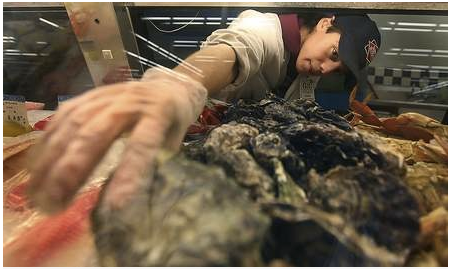
At G & G Market, meat department worker Reuben Caballero
places Drakes Bay Oyster Farm oysters in their display case, Wednesday,
Dec. 5, 2012 in Santa Rosa. (Photo: Kent Porter / Press Democrat)
Five remaining Point Reyes-area oyster farms are poised to capitalize on the looming departure of Drakes Bay Oyster Co., which was ordered last week to close within 90 days.
But devotees of the briny delicacies expressed unhappiness Wednesday at the prospect of losing a major North Coast supplier.
Carlo Cavallo, executive chef and owner of Meritage in Sonoma, said the coming shutdown, ordered by U.S. Interior Secretary Ken Salazar, will force him to fly in oysters from Oregon and Washington.
"Let the boys at the secretary's office and the Obama administration calculate the carbon footprint on that," said Cavallo, who like many restaurateurs serves hundreds of Drakes Bay oysters each week. "I'm furious about it."
Teejay Lowe, chief executive officer of G&G Supermarkets, agreed the loss of the farm owned by Kevin and Nancy Lunny is a blow to the local seafood industry.
Drakes Bay oysters make up the majority of the oysters sold at G&G, which has stores in Santa Rosa and Petaluma. Customers ask for them by name, he said.
"Local oysters truly are an art," Lowe said. "They did a really good job. It was a draw to our markets."
Last week, the Lunnys were given 90 days to pack up and leave the oyster farm, which has been in operation for about 80 years on the shores of Drakes Estero in the Point Reyes National Seashore.
At the urging of environmentalists, Salazar decided to return the 1,100 acres to wilderness and rejected Lunny's request to extend the farm's 40-year permit. Among the concerns was that the mariculture business on public land and water hurt harbor seals and eelgrass.
The Lunnys maintain their farm is an ecologically sustainable provider of almost 40 percent of California-grown oysters. They have challenged an environmental review, saying it relied on flawed science.
On Monday, the Lunnys and a Washington, D.C., government watchdog, Cause of Action, sued to block the closure in U.S. District Court in San Francisco. Lawyers said they would seek a preliminary injunction to extend the Feb. 28 move-out deadline.
As they fought to keep their business alive, consumers pondered how their world would change without Drakes Bay oysters.
The farm, around since the 1930s, harvests 8 million commercially cultivated Pacific oysters a year worth about $1.5 million.
It sells directly to restaurants and markets and has an agreement with a San Francisco seafood distributor.
Smaller outfits like Hog Island Oyster Co. in Marshall could reap the benefits as they pick up extra business. But whether local farms could ever make up the difference is unclear.
Drakes Bay is unique because of its size and location, which protects it from temporary rain closures that hit operations along Tomales Bay.
"It will definitely have an impact," said Michael Lucas, president of Northcoast Fisheries Inc. in Santa Rosa. "How much I don't know. It will have a good chance of driving up prices up for local oysters."
Market problems could be compounded by a short supply of Washington oysters, which have been hampered by water acidity, he said. The larger northwestern oysters most popular for barbecuing will be harder to come by, Lucas said.
"Anytime you wipe a business off the map, it's terrible," he said.
Others predicted more long-lasting effects.
Bill Dawson, owner of Seafood Suppliers Inc. of San Francisco, said production at other farms near Point Reyes is limited by the size of state water leases. Any expansion would likely occur at locations such as Humboldt Bay, he said.
Also, he said the Lunnys operated the last cannery in the state.
"It isn't rocket science," said Dawson, who distributes the Lunnys' oysters to wholesalers in the Bay Area. "It undoubtedly will have an impact on the market for Pacific oysters."
You can reach Staff Writer Paul Payne at 568-5312 or [email protected].
-
1 Attachment(s)
PD Editorial: Shutting down state's biggest oyster farm
https://img194.imageshack.us/img194/...1206081330.png
PD Editorial: Shutting down state's biggest oyster farm
Published: Friday, November 30, 2012 at 7:00 p.m., Modified: Friday, November 30, 2012 at 5:13 p.m.
Direct Link to the article: https://www.pressdemocrat.com/articl...p=all&tc=pgall
For the first time in more than 100 years, oyster harvesting won’t be occurring in Drakes Bay today — and there’s no chance of it starting up again anytime soon.
By directive of Interior Secretary Ken Salazar, operations of the Drakes Bay Oyster Co., producer of 40 percent of California’s oysters, were to cease as of Friday, ending a mariculture operation that has existed for generations and forcing at least 30 people to look for new work.
Even in the best of economic times, California can ill-afford to see thriving private operations put out of business, particularly in the absence of any clear environmental reason for doing so. Our preference, and that of many, including Sen. Dianne Feinstein, would have been to see the oyster company’s lease renewed for 10 years, as was Salazar’s prerogative.
But we acknowledge that the secretary was put in an unenviable position, pressured by Feinstein on one side and Sen. Barbara Boxer and Rep. Lynn Woolsey on the other, forced to make a decision that should have been made clear years ago.
Salazar did not, as some contend, force Drakes Bay to close because of environmental concerns about its impact on the biologically rich Drakes Estero. He made clear in his seven-page directive that, while he considered the environmental debate “helpful” there was “scientific uncertainty” and a general lack of consensus concerning the impacts. Ultimately, he said, it was immaterial anyway “to the legal and policy factors that provide the basis for my decision.”
In the final analysis, he said, his decision was based on the intent of Congress when it established a wilderness area within Point Reyes National Seashore in 1976.
Congress separately authorized the interior secretary to lease agricultural, ranch and dairy lands within its boundaries. Given that, we’re gratified that Salazar this week ordered the renewal of 15 leases for ranchers and dairies for another 20 years, protecting uses that date back to the beginning of the 19th century.
But there was no such wording that authorized the continuation of mairculture operations. Although legislation adopted in 2009 allowed the interior secretary to continue the permit for Drakes Bay, “Congress,” he said, “clearly expressed its intention that the estero become designated wilderness by operation of law when ‘all uses thereon prohibited by the Wilderness Act have ceased.’”
Thus, while the North Bay will be losing an oyster operation, it will be gaining the completion of a wilderness area, the first and only marine wilderness on the Pacific Coast.
While we have sympathy for the owners of the Drakes Bay Oyster Co., the fact is they were well aware that this outcome was possible — if not likely — when they bought the business in 2004. The previous owners were equally aware that the lease would expire on Nov. 30, 2012 back in 1972 when federal authorities paid the company nearly $80,000 in anticipation that one day the operations would end. Salazar decided that day would be Friday.
Those who disagree with this conclusion can take solace in the fact that this was not a decision based on some of the unproven allegations that surrounded this operation but on something more concrete — a deal and a promise made long ago. Given that, Salazar makes a good case for his decision.
-
Re: PD Editorial: Shutting down state's biggest oyster farm
It's been interesting to see this story evolve. The PD editorial, posted in full above and linked to earlier is yet the next curious turn of events. One would expect the PD to come down on the side of the business, but they clearly sided with the Feds. Their editorial also make clear that basis for the Fed's decision was not environmental considerations, but instead just following the law.
However, I also note in Peggy's post that kicked off this thread:
Quote:
Posted in reply to the post by daynurse:
"The farm was intended to be part of the Point Reyes National Seashore from the beginning and it was never our intention to evict them." - Pete McCloskey, Author of Point Reyes National Seashore Act, 1962.
So who knows what going on??
You can see a letter signed by Pete McCloskey requesting the Interior Dept not close down the company here.
I was about to write in support of the Oyster Farm, but then I read the excellent article from the East Bay Express which I'll post below. Having read that and the larger importance of protecting the whole notion of a wilderness, both in West Marin and elsewhere, I'd have to reluctantly (and expensively) support the decision to close the farm.
-
Re: Urgent! Please sign Petition today if you believe the oyster farm should stay!
https://www.waccobb.net/forums/wacco...12-06_1605.png
The Real Reasons for Ken Salazar's Decision
https://www.eastbayexpress.com/ebx/the-real-reasons-for-ken-salazars-decision/Content?oid=3405939
It wasn't about the environmental impacts of Drakes Bay Oyster Company at Point Reyes National Seashore; it was about precedent.
By Robert Gammon @RobertGammon
When US Interior Secretary Ken Salazar announced the closure of a popular oyster farm at Point Reyes National Seashore and the creation of the first marine wilderness on the West Coast late last week, much of the resulting news coverage focused on the debate over whether the oyster farm had been harming the environment. But in a little-noticed memorandum from Salazar, the Secretary of the Interior made it clear that his decision was not based on the oyster farm's impacts on Drakes Estero in Point Reyes. Instead, Salazar stated flatly that his decision to not renew Drakes Bay Oyster Company's lease was "based on the incompatibility of commercial activities in wilderness ...."
Salazar noted that it has been the longstanding policy of the National Park Service to not renew leases for commercial operations on national parkland that Congress had designated to become wilderness. The secretary also noted that when Congress designated Drakes Estero as "potential wilderness" in 1976, it intended the
picturesque inlet to become full wilderness once the oyster farm's lease expired in 2012. Indeed, the only reason Congress didn't designate Drakes Estero as full wilderness in 1976 was because of the oyster farm, Salazar added.
In short, Salazar essentially decided that it would be a mistake to set a national precedent, and thus open the door for other commercial enterprises on potential wilderness land around the country to request lease extensions, too. If the secretary's reason for closing the oyster farm sounds familiar to Express readers, it's because this newspaper noted back in June that the intense controversy over whether Drakes Bay Oyster Company was harming the environment was irrelevant, and that the real issue at stake in Point Reyes was the precedent it would set if Salazar decided to re-up the oyster farm's lease (see "Dianne Feinstein's War," 6/13).
Drakes Estero is now the first federally protected marine wilderness on the West Coast.That was the same conclusion reached by researchers at UC Berkeley School of Law. Their research, which the Express first publicized in June and was published in August in Ecology Law Quarterly, found that the federal government had never before extended the lease of a commercial operation, such as an oyster farm, in an area designated by Congress to become federally protected wilderness. Although US Senator Dianne Feinstein, the oyster farm's primary backer, had claimed that it would not set a national precedent if Salazar renewed Drakes Bay Oyster Company's lease, the UC Berkeley researchers noted that her assertion would "not preclude other members of Congress — noting the Secretary's willingness to sacrifice wilderness values under political pressure — from seeking legislative (or legislatively authorized consideration of) extensions" of commercial leases in potential wilderness areas in their own states.
In other words, Salazar's decision had far bigger implications than the fate of a single business in West Marin. Nonetheless, his decision never appeared to be a slam dunk. Over the years, environmentalists have often criticized Salazar for being overly accommodating to business interests — specifically, to oil and natural gas companies. As a US senator from Colorado in 2005, for example, he voted against raising gas mileage standards for cars and trucks and against eliminating tax breaks for big oil companies. But Salazar is also a lawyer and is ex-attorney general for the State of Colorado.
As such, he had to know that if he had based his decision on the disputed environmental impacts of the oyster farm, he likely would have opened the door for a successful lawsuit from Kevin Lunny, owner of Drakes Bay Oyster Company. In recent years, there has been much debate on the oyster farm's effects on Drakes Estero, but no clear answer as to how substantial those impacts have been. In his memo, Salazar acknowledged this "scientific uncertainty and lack of consensus." Consequently, it was not surprising that Salazar concluded that the environmental issues were "not material to the legal and policy factors that provide the central basis of my decision ...."
Lunny, nonetheless, announced Tuesday that he and his lawyers had filed suit against Salazar in federal court. In a conference call with reporters on Tuesday, Amber Abbasi, a lawyer for Cause of Action, a Washington, DC-based nonprofit that has taken up Lunny's case, said Salazar's decision was illegal because she said the park service failed to adequately examine the oyster farm's environmental impacts. But Abbasi neglected to mention that a 2009 law authored by Feinstein awarded Salazar broad powers in deciding the oyster farm's fate. And Salazar used that law in determining that the environmental debate over the oyster farm was essentially irrelevant.
Salazar also effectively undercut another of Lunny's major arguments. Lunny, whose family also leases a cattle ranch on Point Reyes National Seashore property, had predicted that if the oyster farm's lease was not renewed, then the National Park Service would target the cattle ranchers next. The National Park Service had repeatedly denied such assertions, noting that cattle ranches at Point Reyes operate on land that had not been designated by Congress as potential wilderness. And late last week, Salazar, a former cattle rancher, reaffirmed that position, directing the park service to look into extending the cattle ranch leases at Point Reyes from ten to twenty years.
Finally, Salazar's decision represented a major blow to Feinstein. California's senior senator had worked doggedly over the past few years to convince the Obama administration to renew the oyster farm's lease for ten more years — and thus delay the creation of the marine wilderness. But last week, several prominent Democrats made it clear that they disagreed with Feinstein. US Senators Jeff Bingaman, Ron Wyden, and Mark Udall, along with Congressman Edward Markey praised Salazar's decision. "We applaud the decision to follow the clear intent of Congress, as well as an agreement signed almost four decades ago to establish the nation's first marine wilderness on the West Coast at Point Reyes National Seashore," the members of Congress said in a statement.
And even US Senator Barbara Boxer, who had remained quiet on the oyster farm controversy, let it be known that she did not agree with Feinstein, either: "This has been a very challenging issue, but I have great respect for the decision made by Secretary Salazar to allow this permit to expire at the end of its term."
Indeed, in the end, Salazar's decision essentially proved that Feinstein had wasted her time. By reasserting the park service's longstanding policy of not renewing leases in potential wilderness areas, Salazar effectively showed that the park service was perfectly capable of making the final decision about the oyster farm and that Feinstein need not have written legislation giving him that power. In fact, Salazar repeatedly noted in his memo that back in 2005, the park service had told Lunny that "no new permit would be issued" to him at Drakes Estero after his lease expired on November 30, 2012.
-
Re: Please sign NEW Petition to Obama if you believe the oyster farm should stay!
Quote:
Posted in reply to the post by tommy:
It is unfortunate that our culture has become so litigious. So many people in our culture seem to act as if they are the King, and whatever they want, they should be able to have. The brohaha over the oyster farm is an example. The debate has been going on for years, with each side having good arguments. However, in my judgment, the pristine sacredness of Pt Reyes has trumped one man's livelihood. Thank you to the Interior Secretary for having the balls to call this for the good of Mother Earth. The decision was supported by the Sierra Club and other environmental groups. This is an example of one person having to make sacrifices for the good of all. Mr Lunny seems to have no respect for the extensive process, consideration, decision, and associated costs, that has been devoted to this. This was a risk that he took when he bought the farm in 2004. He lost. I'd hope in the future he won't bet against Mother Earth.
I really wanted to stay away from this- its so unbelievable to me that anyone would want to close down the oyster farm on Pt Reyes! This is gotten so twisted and out of hand I cant understand the reasoning except that politics don't make sense anyway.*
The oyster farm is there for ages and it works- its food, clean food for many without Monsato, no pollution, etc etc...
The National Park Service is doing great things but at time it looks like they are turning into the "Green Gestapo".
You don't like to go against the mother earth?- *then keep the millions of tourists- the national advertising- to visit every little park away and leave it "untouched and natural"! Parks are overrun with to many cars, pollution, trampled over- *deer, rabbits etc are put out of sight... neighborhood traffic a pain in the etc...
I met a jung man in Armstrong Woods Park showing me very happily a large beautiful lizard he had in his hand- he told me he pulled his tail off because he learned at his University in S.Fr. that they will grow back! I felt like pulling his off too!
You like to preserve nature? Then how about what's going on around Annapolis up north: around 1900 acres timber to vineyard conversion! Try to stop that!
It was great that NPS installed over the years all these outhouses along the coast and parks- now halve of them are closed, overgrown, run down- a waist of money. All the board walks along the coast- eventually will be washed out, *buried by mudslides- respect nature and leave it alone if thats what you want!*
The oyster farm is working with nature and it worked all along to the benefit of so many- don't destroy something that's worked for so long so good! It just does not make sense!
edie
-
Re: PD Editorial: Shutting down state's biggest oyster farm
Quote:
Posted in reply to the post by Barry:
Now, after the reading the letter above my opinion is wavering again. Before environmental considerations, before even precedent setting considerations of private encroachment into wilderness lands, there first needs to be a determination if the feds have the rights to the land/water at issue.
By my reading of the above letter, the 1965 law (A.B. 1024) that transfered the tidelands and bottomlands to the Park Service, the State of California reserved the shell fishing rights. So it seems the feds don't have jurisdiction over that aspect. I couldn't find the text of A.B. 1024 since 1965 is pre-historic (or at least pre-digital). And IAMNAL
-
National Review Online Article
Things out here are going from bad to worse. Having the Feds descend on your community is dreadful with visits to terrified oyster farm workers (two heros were there to help, thank god) and early morning wake up calls at each of the ranches to present the new 20-year leases to the ranchers. Salazar's 'generous' gift of 20-year leases (why not 99-years?) have a hefty capital-improvement clause that has to be fulfilled within 5 years, will it break the ranchers?
Peggy
https://www.waccobb.net/forums/wacco...12-08_1855.png
A Shucking Shame
Brigid and Sean knew from their father’s face that the news was not good. Over a short phone call, the Lunny family learned that a decision from the federal government would cost them their livelihood, their family home, and their retirement plan.
“I was standing in our little oyster shack, the retail store where people gather,” says Kevin Lunny, the patriarch and owner of Drakes Bay Oyster Co. “The phone rang, and my daughter answered it. She said, ‘It’s Secretary Salazar, for you.’ We all knew, and we were all waiting. None of us could sleep, none of us could physically eat as we were awaiting the decision. Sean’s looking at me. Brigid’s looking at me. About a minute into the conversation, I hadn’t said anything, and they were both in tears because they could see my face. This was not the decision we’d hoped for and prayed for. Walking out of that room and onto the dock where our 30 employees were waiting — you had all 30 of us in tears because it’s a tragedy.”
On November 29, Ken Salazar, secretary of the Department of the Interior, announced his decision not to renew Drakes Bay Oyster Co.’s lease on National Park Service land in Marin County, about 30 miles north of San Francisco. Citing the 1976 Point Reyes Wilderness Act, the National Park Service intends to establish a federally designated wilderness area, the first on the West Coast, on the land where the oyster farm has long operated.
The Lunnys and their 31 full-time employees, many of whom have worked for decades on the family farm, will lose their jobs. Fifteen, who lived on the premises, will also lose their homes. And the company, which has functioned on the property for decades, has only three months to vacate.
One would hope the Interior Department would do everything in its power to preserve a small business unless it had a good reason to do otherwise. As it was, recent legislation explicitly allowed the Interior Department to extend the oyster farm’s lease for ten years. But it looks like the National Park Service wanted the land as wilderness, then set about to obtain it at all costs. Salazar largely avoided mentioning science in his decision — probably because the Interior Department and National Park Service studies measuring the environmental impact of the oyster farm have been riddled with errors.
* * *
Corey Goodman, a 61-year-old professor emeritus at Stanford and Berkeley, is an animated man. When he explains a concept, he gestures often. Though he can explain complicated scientific studies simply, he’s brilliant, a lauded scientist with an impressive résumé that spans the academic, private, and public sectors. Elected in the 1990s to the National Academy of Sciences, the most respected scientific organization in the United States, Goodman became interested in science and public policy, chairing the Board of Life Sciences. He has long expressed his commitment to science before politics.
A California resident, Goodman received a phone call from the Marin County supervisor, Steve Kinsey, in 2007. Kinsey recounted the Park Service’s recent allegations of environmental damage from a small oyster farm with an otherwise impeccable reputation, then asked Goodman to fact-check the government’s claims. Goodman agreed, reviewed the data, and attended a public hearing on Drakes Bay Oyster Co. He had never met the Lunnys, but he was appalled at what he heard from the Park Service officials: Their statements completely conflicted with what Goodman had found.
“I sat and listened to the Park Service that day make the most incredible claims,” he tells National Review Online. “We hadn’t heard exaggeration,” Goodman recalls. “We’d heard things that were simply not true.”
His interest piqued, Goodman embarked on what became a five-year examination of the Interior Department and National Park Service studies of the oyster farm.
“I’ve never seen anything like it,” Goodman says. “It’s a stunning misuse of science by our federal government. . . . They have spent a huge amount of money trying to find harm when it doesn’t exist. . . . The Park Service was determined to get rid of the oyster farm, and they simply made [the environmental damage] up. . . . These people aren’t following the data. They’re following a predetermined agenda.”
At one point, the Park Service issued a glossy brochure claiming that oyster feces were causing significant damage to the eelgrass and fish. Skeptical, Goodman investigated, examining previous data from the California Department of Fish and Game, as well as reports from none other than the National Park Service. Based on those government studies, Goodman discovered that the oyster farm actually had some of the healthiest eelgrass in California, a turf that had doubled in size in the past decade. Goodman also chased down a UC Davis report that showed the fish populations were thriving.
Reviewing the Park Service’s sourcing, he found very specific numbers about tons of oyster feces’ being produced, all referenced to a 1991 study. Diligently, Goodman tracked that report down. He found that while the paper cited by the Park Service did examine the sediments surrounding the oyster farm, it concluded that there was no problem with oyster feces there. The 1991 paper, in turn, cited another study measuring oyster feces, one from 1955 that examined a totally different type of oyster off the coast of Japan. The Park Service had taken these old numbers from a foreign land and claimed they were data from present-day Drake’s Bay Oyster Co.
Finally, Goodman found a 2005 study examining the ecosystem in the water surrounding the oyster farm — funded, oddly enough, with National Park Service money. That report concluded that, near Drakes Bay Oyster Co., the dominant organic sediment was from the lush, abundant eelgrass. In other words, the National Park Service’s claim about damage to the eelgrass and fish was not only poorly researched; it was flagrantly wrong.
“Either it’s just really sloppy science,” Goodman says, “or it’s deliberate. But when you see the same people do the same thing over and over and over again, it’s hard not to conclude intent.”
The examples of bad science are abundant. In another report, Goodman discovered that the Park Service had claimed the oyster farm had an adverse effect on red-legged frogs, an endangered species. One problem: Red-legged frogs live in fresh water, not the salt water of the oyster farm. Goodman dug further and found that the Park Service was claiming that the presence of Drake’s Bay Oyster Co. put the red-legged frog at “increased risk for vehicle strikes.” In other words, the government was claiming that an endangered frog might somehow trek toward the seashore, cross a road, and get hit by a car on the half-mile path leading to the oyster farm.
And recently, the Park Service complained that one of the “major impacts” of the farm was on the soundscape of the surrounding parklands. The Park Service was talking about noise from Lunny’s plastic oyster tumbler, a machine used to sort oysters by size, powered by a tiny, one-quarter-horsepower electric motor. But rather than measuring the sound from the oyster tumbler itself, Goodman discovered the Park Service had used as a stand-in some noise-disruption data from a 400-horsepower cement truck, and later from a portable metal army cement mixer filled with gravel and stone. And — here’s the kicker — the Park Service also assumed an ambient silence level roughly comparable to that of the Vatican library. It was an imaginative report, but it had nothing to do with the sound situation near the oyster farm.
Those are just some of the examples. After examining years of data about the oyster farm, Goodman has reported that the federal government’s reports were repeatedly inaccurate. He has also concluded that “Kevin Lunny is an environmental icon,” “a great steward of the environment,” and “one of the pioneers for organic and sustainable agriculture that also protects the environment.”
Nevertheless, the federal government’s data maligning the Lunnys’ farm was disseminated to environmental groups and immediately publicized. The faulty data were frequently cited by these organizations, even after the National Park Service was forced to admit errors. The Save Drakes Bay Coalition, a group of more than 40 local, regional, and national environmental organizations, all took up the cause of evicting Drakes Bay Oyster Co. from the Park Service land. The Lunnys say that they usually agree with such environmental groups and that the groundless attack caught them off guard.
* * *
Meanwhile, instead of apologizing for its scientific errors and dropping its case, the federal government has resorted to personal attacks when its data were proven faulty, Goodman says. He has also been careful about ensuring that there are no conflicts of interest, receiving no compensation from the Lunny family, Drakes Bay Oyster Co., or any of the other parties involved. He told me that his involvement was initially at the request of the Marin County supervisor, and later at the request of Senator Dianne Feinstein (D., Calif.).
Nevertheless, Goodman says, if he were 25 and a scientific neophyte, “they would have destroyed me by now. . . . They would have just rolled me over.” It’s been hard, though, for the federal government to dismiss a scientist with Goodman’s credentials. But he says he worries about the precedent this case sets.
“I’ve been outraged by the way my government, in the National Park Service and with the seeming approval of the Department of the Interior, has misused science over and over,” he says. “This sends a terrible example throughout the federal government. If they get away with this — which so far they have — it sends the signal to every young scientist throughout the federal government to forget about science, forget about data, find out what your boss wants.”
These botched pseudo-scientific studies should be a central consideration in the battle over Drakes Bay Oyster Co. But the Interior Department has attempted to relegate science to the sideline in this decision. If Secretary Salazar prevails, it will be thanks to a grossly flawed interpretation not only of science but of law.
Back in 2004, the National Park Service had issued an opinion stating that the 1976 Point Reyes Wilderness Act, which designates the surrounding Drakes Estero as a potential wilderness area, did not allow the oyster farm’s leasing permits to be extended.
Senator Feinstein decided to champion the cause of the small oyster farm, crafting a rider to an appropriations bill that explicitly allowed the Interior Department to extend the oyster farm’s lease for ten years, “notwithstanding any other provision of law.” She also directed Salazar to “take into consideration recommendations of the National Academy of Sciences Report.”
What happened then is suspicious, to say the least. At first, the Interior Department began following the procedures outlined in the National Environmental Policy Act: Before it made a decision on the lease, the law required Interior to complete a draft environmental-impact statement, analyze the results, allow for public involvement and comment, issue a final environmental-impact statement, invite public comment again, and then issue the final decision.
However, Goodman and others at the National Academy of Sciences found numerous problems with Interior’s environmental-impact statements, some of which were just described. Furthermore, the Interior Department was running behind schedule. It issued its final environmental-impact statement the Wednesday before Thanksgiving, just days before the final decision on the lease permit for Drakes Bay Oyster Co. was due. That didn’t allow enough time for the period of public comment mandated by the National Environmental Policy Act.
So Salazar simply reinterpreted the law. He claimed that because Feinstein’s rider had given him authority to extend the lease “notwithstanding any other provisions of law,” he was free to deny the lease and disregard the National Environmental Policy Act, too. That would also allow him to make a decision without considering the findings — and many errors — within the environmental-impact statements. It essentially took the science out of the decision.
“That’s a fairly broad grant of authority that [Salazar] is embracing there,” says Amber Abbasi, chief counsel for Cause of Action, a government-accountability group representing the Lunnys. She adds that the history of Feinstein’s rider legislation “clearly indicates that Section 124 was passed to rebut the National Park Service Interpretation of the 1976 Wilderness Act.”
The Lunnys’ interpretation of Feinstein’s rider seems spot-on. After all, Feinstein wrote that she “authored legislation to give the Interior Secretary the option to extend the oyster company’s lease by ten years.” The senator also wrote that “the Park Service has repeatedly misrepresented the scientific record since 2006 to portray the farm as environmentally harmful, and it is my belief that the Park Service is doing everything it can to justify ending the oyster farm’s operations.”
The Lunny family bought Drakes Bay Oyster Co. in 2004, but their history with the land goes back even further. Kevin Lunny was born and raised on a cow-and-dairy farm that overlooked the oyster farm, a child of the Point Reyes National Seashore. When Drakes Bay Oyster Co. went for sale, Lunny was thrilled. “It’s such a beautiful, sustainable food system,” he tells National Review Online.
“It’s extremely healthy for the environment. There’s no feeds, no fertilizers, no chemicals. . . . [We] got very involved and passionate about the local-food movement, organic production, sustainability, and local marketing.”
A committed environmentalist, Lunny wanted to farm oysters in a responsible way. He took out a $300,000 loan to clean the farm and restore the property, using the old Lunny family cow ranch as collateral. As the Lunnys’ reputation for good oysters and responsible, sustainable agriculture grew, the farm became more and more popular. The Lunnys were able to make payments on their loan, maintain their employees, and stabilize their inventory. The farm was holding its own.
The Interior Department’s decision not only kills the farm but also financially ruins the Lunny family. The farm is home to an inventory of baby oysters worth nearly $5 million, all too young to be harvested and sold. Furthermore, with their business shuttered, the Lunnys will have no way to repay the loan they took out to improve the farmland, so they’ll probably also lose the cattle ranch they used as collateral.
“This is not a store where we can have a fire sale, sell everything off the shelves, and go away,” Lunny says. “The Park Service is asking us to kill all these oysters, destroy all this food, get out before they can even be harvested. There’s no way for us to recover our investment.”
* * *
The National Park Service would not take questions from National Review Online, referring reporters instead to the Interior Department. Blake Androff, the Interior Department’s spokesman, would not respond to questions about the numerous scientific errors in the National Park Service and Interior Department reports. He also wouldn’t comment on why the Lunnys were given only 30 days to vacate the premises.
Instead, Androff responded with an e-mailed statement: “The Secretary made his decision after careful consideration of the applicable law and policy. The Department will carefully review the complaint and any related materials that may be filed. The Department does not comment on litigation.”
The Sierra Club, the Environmental Action Committee of West Marin, and the Marin Conservation League — all of whom have made the environmental case against the oyster farm — did not return phone calls by the time this story was filed.
And Gordon Bennett, spokesman for Save Our Seashore, said that, “with all due respect, we’re not opposing the oyster farm. We’re supporting wilderness.” He said that, regarding the oyster farm, “it doesn’t matter if they’re doing good or bad. It’s irrelevant.” He added that it was the Lunnys’ responsibility to prepare for job losses and provide retraining opportunities and severance to the employees who were out of work when the farm was evicted.
Meanwhile, the Lunnys, working with lawyers from Cause of Action, have launched one final attempt to keep their farm. They say they were not afforded due process and have lost their property through arbitrary action of the government — both claims are constitutional. Furthermore, they allege that Interior violated the National Environmental Policy Act and that the Park Service violated its own rules. On Monday, the Lunnys filed for injunctive relief, which would allow them to continue to operate the farm until a court rules on the case.
To be sure, it’s an uphill battle. The Interior Department has millions of taxpayer dollars at its disposal. Meanwhile, the Lunnys are on the brink of bankruptcy.
“We’re saying now, ‘We are dead,’” Lunny says. “It’s a really insensitive and harsh way to throw us out. [It] will completely destroy us.”
– Jillian Kay Melchior is a Thomas L. Rhodes Fellow for the Franklin Center for Government and Public Integrity.
-
Re: Please sign NEW Petition to Obama if you believe the oyster farm should stay!
It is my experience that in the wilderness, there are no commercial businesses operating. A wilderness area is a wild place, by it's nature. Thus I support the closing of the oyster farm.
Quote:
Posted in reply to the post by edie:
I really wanted to stay away from this- its so unbelievable to me that anyone would want to close down the oyster farm on Pt Reyes! This is gotten so twisted and out of hand I cant understand the reasoning except that politics don't make sense anyway.*
The oyster farm is there for ages and it works- its food, clean food for many without Monsato, no pollution, etc etc...
The National Park Service is doing great things but at time it looks like they are turning into the "Green Gestapo".
You don't like to go against the mother earth?- *then keep the millions of tourists- the national advertising- to visit every little park away and leave it "untouched and natural"! Parks are overrun with to many cars, pollution, trampled over- *deer, rabbits etc are put out of sight... neighborhood traffic a pain in the etc...
I met a jung man in Armstrong Woods Park showing me very happily a large beautiful lizard he had in his hand- he told me he pulled his tail off because he learned at his University in S.Fr. that they will grow back! I felt like pulling his off too!
You like to preserve nature? Then how about what's going on around Annapolis up north: around 1900 acres timber to vineyard conversion! Try to stop that!
It was great that NPS installed over the years all these outhouses along the coast and parks- now halve of them are closed, overgrown, run down- a waist of money. All the board walks along the coast- eventually will be washed out, *buried by mudslides- respect nature and leave it alone if thats what you want!*
The oyster farm is working with nature and it worked all along to the benefit of so many- don't destroy something that's worked for so long so good! It just does not make sense!
edie
-
Re: Please sign NEW Petition to Obama if you believe the oyster farm should stay!
Here are some problems with word definitions.
To clarify. The 1976 law named the area a "potential wilderness". That is not the same thing as a "wilderness". By definition, a wilderness does not have a road supporting traffic (60,000 cars a year up to now) through it but Drakes Bay does. It's also on a major flight path for the San Francisco Airport with heavy air traffic. How they are going to get around that in order to enact a wilderness act will be interesting.
I agree with you about the idea of going out to an untainted natural area but the plan is to turn this into a kayaking mecca, what some call Drakes Bay Theme Park.
Another word that is misused. The Point Reyes National Seashore is not a national park. It's a seashore with working ranches (profit-making) included in the definition. Salazar just agreed to renew those leases for the next 20 years.
Peggy
-
Re: National Review Online Article
Much of the National Review Online article supporting the Drakes Bay Oyster Company relies on one scientist, Corey Goodman. For another perspective of his views, read https://www.savepointreyeswilderness...AL-version.pdf
Quote:
Posted in reply to the post by daynurse:
Things out here are going from bad to worse. Having the Feds descend on your community is dreadful with visits to terrified oyster farm workers (two heros were there to help, thank god) and early morning wake up calls at each of the ranches to present the new 20-year leases to the ranchers. Salazar's 'generous' gift of 20-year leases (why not 99-years?) have a hefty capital-improvement clause that has to be fulfilled within 5 years, will it break the ranchers?
Peggy
https://www.waccobb.net/forums/wacco...12-08_1855.png
A Shucking Shame
Brigid and Sean knew from their father’s face that the news was not good....
-
Re: Please sign NEW Petition to Obama if you believe the oyster farm should stay!
The ranches birthed the Point Reyes National Seashore and protected the land from development before that. They are all organic, sustainable farms. Wilderness zealots are not environmentalists, the farmers are. "No farm = no food". Not a one of us who were at the Salazar meeting on the coast believed him when he said the ranchers not going to be next. Neither does Spotswood - below:
https://www.waccobb.net/forums/wacco...12-09_1622.png
Dick Spotswood: Oyster farm's ouster signals end of all commercial agriculture in Point Reyes National Seashore
https://www.marinij.com/opinion/ci_2...ignals-end-all
By Dick Spotswood
Special to the IJ
Posted: 12/09/2012 05:00:00 AM PST
THE DECISION by U.S. Interior Secretary Ken Salazar to shut the Lunny family's oyster farm ultimately will spell the doom of all commercial agriculture on Point Reyes. Within the next 20 years you can bet that the remaining dairy and cattle ranches in the National Seashore will go the way of the dodo.
The existence of private cattle and dairy ranches seemingly offends environmental activists and Interior Department staffers. Most philosophically oppose any private sector involvement, no matter how benign or sustainable, on the peninsula.
Here's how they'll do the deed. They'll contend that fecal runoff from dairy and beef cattle is raising nitrogen levels in Drakes Estero and Tomales Bay. They will assert that harms the newly pristine wilderness created when oyster harvesting was banned. Ergo, dairy and cattle ranches must go.
There will be the usual voluminous reports so beloved by the activist community. Like the questionable studies on Lunny's oysters, their conclusions will be determined far in advance of any actual research.
Recall that when the Point Reyes National Seashore wilderness area was created in the 1970s by Rep. Phil Burton, the goal of most Marinites was preservation of the peninsula's historic agriculture and aquaculture heritage.
The National Seashore was then the only available vehicle to preserve Point Reyes' centuries-old tradition of working ranches. If the Marin
Agricultural Land Trust had been around, agriculture-friendly MALT would have been the preferred route to make this happen.
Some West Marinites then feared the Park Service was untrustworthy and would eventually go back on promises to retain ranching in perpetuity.
After the Point Reyes experience, why would other locales trust Interior Department assurances when it comes to efforts to save open ranch and farm lands throughout the American West?
Match the death of the oyster farm with the widely unpopular fiasco over filmmaker George Lucas' failed effort to create green jobs at Grady Ranch. If the environmental community has a few more "victories" like this, they will lose both popular support and political clout.
The whole "oyster" brouhaha is an exercise in hypocrisy.
Start with activists boasting they are proponents of "environmental justice." That's defined as "the fair treatment and meaningful involvement of all people regardless of race, color, sex, national origin or income with respect to the development of ... environmental policies."
Try telling that to the 30 men and women who have lost their oyster harvesting jobs and, in 90 days, their homes. If the dairies go away, explain it to the West Marin ranch hands and small-town business workers, half of whom are Hispanic, when the economic sources of their livelihood evaporate.
Don't patronize these blue collar workers with some bureaucratic offers of job retraining as trail guides. They get it. If the Interior Department phases out agriculture, they are toast.
If the dairies and beef ranches are shut, all that these blue- collar workers will have left to foster their rural lifestyle is a tourist-based economy serving those who are, like most of activists and Park Service honchos, idealistic white folks with upper-middle class backgrounds.
Regional agencies that constantly sermonize that Marin must do more to provide "affordable housing" are amazingly silent when truly affordable rural housing is lost.
Given the impact on the West Marin Latino community if commercial ranching dies, it's odd that the agencies' usual sanctimonious yearning for "diversity" is given short shrift.
It will come to no good if the "last great place" loses working ranches and dependent small towns are decimated. Along with jobs, housing and lifestyle, if commercial agriculture dies, Point Reyes will lose much of what made it "the last best place."
-
Re: WHERE? Urgent! Please sign Petition today if you believe the oyster farm should stay!
Where's the petition? I've been wanting to sign it, did a facebook blurb on it but have yet to see a petition, just articles. thanks.
-
Re: SignHereUrgent! Please sign Petition today if you believe the oyster farm should stay!
It was in one of those many posts above. Presidents have reversed Secretary decisions in the past so this may be the only recourse.
Thanks for blasting this issue!
https://petitions.whitehouse.gov/pet...rtment/GXsMsG3
Quote:
Posted in reply to the post by SandBar:
Where's the petition? I've been wanting to sign it, did a facebook blurb on it but have yet to see a petition, just articles. thanks.
-
Re: Please sign NEW Petition to Obama if you believe the oyster farm should stay!
Quote:
Posted in reply to the post by daynurse:
Here are some problems with word definitions.
To clarify. The 1976 law named the area a "potential wilderness". That is not the same thing as a "wilderness". By definition, a wilderness does not have a road supporting traffic (60,000 cars a year up to now) through it but Drakes Bay does. It's also on a major flight path for the San Francisco Airport with heavy air traffic. How they are going to get around that in order to enact a wilderness act will be interesting.
I agree with you about the idea of going out to an untainted natural area but the plan is to turn this into a kayaking mecca, what some call Drakes Bay Theme Park.
Another word that is misused. The Point Reyes National Seashore is not a national park. It's a seashore with working ranches (profit-making) included in the definition. Salazar just agreed to renew those leases for the next 20 years.
Peggy
I am not against an untainted natural area but there should be a balance of what will be lost and what gained.*
There are only a few small Oyster Farms in California- to close this one would mean to import oysters from polluted waters of Asia for higher costs and more burning of fossil fuels? This would be insane!
So, is (or was) the real reason for the Oyster Farm to close down the -Kayaking Mecca Drakes Theme Park-?
It would not surprise me a bit- I was expecting something like that!
We for sure need more tourists in the "wilderness" - and of course this has nothing to do with "being commercial" or has it?
Is it for real now that the Oyster Farm has a new 20 year lease?*
edie
-
Re: Please sign NEW Petition to Obama if you believe the oyster farm should stay!
This article (below) is written by someone who has done a lot of homework. (S)He mentions the big rangers who were brought in to keep Phyllis Faber out of the NPS meeting. I witnessed it and it was scary. She is 72 and frail and was clearly saying she was a journalist and had a right to be in the meeting. She was not agitating or aggressive in the slightest. The NPS guys walked together and backed her away from the entrance. All the while, allowing me in even though I had left my credentials at home. They took my word for it. - Peggy
Salazar Brings Closure to the Oyster Farm, but not to the Community.
Posted on December 5, 2012 by russianrivertimes
A walk down the main street in Point Reyes reveals a community shocked and deeply angered over the closure of the historic oyster farm in Drakes Estero. During the seven-year conflict, and despite repeated promises to do so long before now, last week Interior Secretary Ken Salazar finally visited the oyster farm.
Secretary Salazar must have told his staffers to get him in and out of Point Reyes as quickly as possible in his visit, one supposedly meant to decide the fate of the Lunny family’s operation. Contrast that with Prince Charles, who came to see W. Marin’s thriving sustainable agriculture, sat down to a lunch with many of the farmers and ranchers, with Kevin Lunny seated next to him. Prince Charles even went and had a pint with the locals at the Western Saloon. Salazar never walked down Main Street, but if he were to do so today, he would hear a radically different story than he heard during last week’s carefully choreographed visit.
According to surveys conducted by the Marin Independent Journal, about 84-87% of local and area residents consistently favor continuation of the oyster farm. However, during Secretary Salazar’s eleventh-hour visit to West Marin, he allocated only a half an hour to meet with three specific groups: the Drakes Bay Oyster Company, the National Park Service, and “Stakeholders.” Curiously, the “Stakeholder” meeting was invite-only, and largely represented anti-oyster farm environmental groups. (In fact, MALT Founder and environmental icon Phyllis Faber was barred from entering the Stakeholders meeting to discuss the oyster farm. Local political representatives were also not invited. Surely, Secretary Salazar has a curious interpretation as to the Department of the Interior definition of a Stakeholder. There is a suspicion that NPS arranged for Salazar to hear from only the 13-16% of the public represented by the oyster farm opponents, mostly a coalition of environmental groups.
The overwhelmingly pro-oyster figures mirror the substantive public comments vs. cut-and-paste one-click comments received on the Draft Environmental Impact Statement (EIS). When the ‘one-click’ web responses are separated out, as required by the National Environmental Policy Act (NEPA) and the EIS contractor, 90% of the EIS comments favored the oyster farm. Despite the actual data, NPS claims 90% support for evicting the oyster farm, based solely on a ‘click-through’ web survey by the Sierra Club, NPCA and others under a combined contract with Convio. As a company that serves non profit causes, Convio set up a program that allowed its clients (including NPCA and Sierra Club) to send a mass email to their membership lists. That special email imploring readers to click on a link to “Take Action” – that allowed them to immediately submit a copy-and-paste anti-oyster message to the EIS process. Giving such one-click, copy-and-paste submission the same weight as substantive, issue-based comments violates NEPA regulations. It is even more telling given the fact that Jake Hoogland, who visited the oyster farm and headed up the project for VHB, the contractor on the $2 million dollar EIS, had previously headed the NPS program for NEPA compliance and developed the public comment program.
None of the national organizations who commissioned the massive anti-oyster comment program have disclosed the nature of the program, how the lists were compiled or how many of the people had actually visited the oyster farm or if they even knew they were responding to a Draft EIS.
What is clear from NPS records is that the majority of the one click responses came immediately after Neil Desai of NPCA sent out a national bulletin stating that the oyster operation was threatening four endangered species, an assertion disproved by federal and state agencies in their substantive comments to the draft EIS. NPCA, Sierra Club and other groups found a clever way around the EIS rule, which disallowed bulk comments. Because they had access to this specialized Convio software/service, they were able to collect bulk comments this way and be counted as individual comments to the EIS process. In contrast, the Lunnys collected a petition signed by over 7700 people who had actually visited the oyster farm and attempted to submit it to the EIS process. The NPS rejected the oyster farm’s petition from actual physical farm visitors, but allowed the anti-oyster crowd to submit what amounts to a fancy electronic petition of people who may never have even heard of the farm, or who may not have known what an EIS was.
On his visit to the oyster farm, Salazar and Kevin and Nancy Lunny hold a perfectly normal conversation in front of the oyster tumbler. Nancy is holding a sound meter, which was used to measure the levels to compare with the values in the Draft EIS and Final EIS, which were based on ‘imported’ data rather than the actual measurement required by NPS policy. At the NPS reported sound levels, which would have been clearly audible over a mile away, this conversation would have been impossible. (Photo courtesy of Linda Petersen, West Marin Citizen)
The photograph captures the feeling of many in West Marin; that the realities of our community simply don’t exist as far as NPS and Salazar are concerned, and that the Secretary’s visit was just a pro-forma sham before giving in to the NPS and the anti-oyster faction. Salazar never met with the majority of the stakeholders, nor did he discuss the matter with local government. Despite having requested to meet, Marin Supervisor Steve Kinsey would not have had a chance to speak to Salazar if Kevin Lunny had not given up some of the half-hour allocated to the oyster farm visit. This continues the pattern of NPS’ failure to consult with all the stakeholders and government of gateway communities, despite clear requirements in DOI policy. Notwithstanding, Point Reyes National Seashore officials arranged a ‘community’ meeting comprised solely of members of the anti-oyster farm environmental coalition.
For many in West Marin, the question of who is a stakeholder and who represents the community was underscored by Salazar’s meeting at NPS headquarters. The coalition brought in a ‘celebrity’ scientist, Sylvia Earle. Neil Desai, of NPCA, announced that she would be available to the press after her presentation. She was allowed to speak to Salazar at length, but apparently has done no research in the Estero, had not met with the Lunnys, and from her statements was clearly unaware of key facts (such as the Seashore denial of permits to a federal Sea Grant funded program working with the Lunnys on re-establishing native oysters in the estero). However, Phyllis Faber, a well-known local scientist who has conducted substantial research in the area, co-founded Marin Agricultural Land Trust (MALT) and was instrumental in the creation of the California Coastal Commission, was physically barred from the meeting by four park rangers. This most unfortunate NPS behavior was actually recorded in a photograph in the Nov 29th West Marin Citizen. (It only shows two of the rangers) Faber’s contributions to MALT alone, which has preserved thousands of acres of pastoral land adjacent to the Seashore, should have given her a seat at the table.
And the stakeholder issue gets worse. In the Drakes Estero EIS, NPS claimed significant harm from sound impairment due to the oyster farm. The draft EIS stated that the noise levels from the oyster operation was ruining the wilderness experience for the customers of the commercial kayakers who provide trips in the estero. (One would think these kayakers would certainly be defined as stakeholders.) Not only did the NPS fail to consult the kayak companies to ask about sound impairment on their tours, but NPS actively ignored the contrary information provided directly to them by the kayak companies. The kayak companies wrote a comment letter to NPS regarding the draft EIS stating that the Park (a) had failed to consult the kayakers themselves regarding the claims about kayaker experiences, and (b) was deliberately misrepresenting the fact that the oyster sounds and operations had no impact on their kayaking experience. Not only did NPS fail to ground-truth their accusation, they failed to reexamine their position after being provided with clearly contradictory evidence.
One person I spoke commented that this type of dishonest behavior and Salazar’s visit were rapidly becoming the poster child for why people have such a low opinion of government, and if local communities can’t trust that NPS will follow its own policies and previous decisions regarding West Marin, local governance becomes impossible.
Salazar’s expressed concern over the fate of the oyster workers was greeted with derision by many in the community. As one ranch owner stated, “Salazar claims that he has the power to extend the ranch leases by a decade, yet can’t lift a finger to grant the time to make an orderly transition for Kevin and the oyster workers, throwing them all out right before Christmas, at the worst time of year to find jobs and forcing Kevin to rip out the farm during the winter storms. Bull….. As far as I’m concerned, NPS and its environmental henchmen are nothing more than a bunch of green collar criminals.” Hopefully, Salazar will be forced to reconsider his decision. In that case, he should read his own policies on gateway communities and stakeholders (there’s even a DOI site on how to find them) and come out and meet the same people that Prince Charles visited. We’ll even buy him a beer at the Western.
-
Re: PD Editorial: Shutting down state's biggest oyster farm
It is sad to see the ending of this local company as in many other parts of Wilderness, they have allowed a thriving and yet noisy business to flourish - such as the Yellowstone National Park, etc. I still think it is controversial and that this company should be allowed to continue as they have done for so many years. They have done no harm and actually - through the oysters - have made it better for all the Sealife around there!
-
The Wall Street Journal agrees with 80-90% of Marin Residents
"First, the lease doesn't say that it isn't renewable. Second, the congressmen who helped form the Point Reyes National Seashore have firmly stated that their intention was to ensure the continued operation of the small farms that were occupying the land. Yet the Interior Department has ignored the statements of former California Reps. Pete McCloskey (no staunch right-winger, by the way, but a pro-choice advocate and backer of stem-cell research and assisted suicide) and John Burton (a former California Democratic Party chairman)"
https://www.waccobb.net/forums/wacco...12-12_0947.png
OPINION
December 10, 2012, 7:14 p.m. ET
Welcome to the Salazar Wilderness
https://online.wsj.com/article/SB10001424127887323501404578161483500373510.html
Shame on the Interior Department for trying to drum a family-owned enterprise out of business.
By MICHAEL MORITZ
After a seaside area has been designated as wilderness, when is it considered pristine enough by Washington 's standards? Is it after airplanes have been banned from flying over it? After electricity pylons and telephone cables have been removed, cars and bikers prohibited, the roads torn up? When hikers are forbidden access to trails, and kayakers, sailors and snorkelers banished from the water? When eucalyptus trees and other foreign species are eradicated? Or only after Miwok Indians' arrowheads have been excavated and placed in a museum?
Apparently it is none of the above, at least according to Secretary of the Interior Ken Salazar. Instead, he seems to think that turning a tiny portion of the lovely coastline of California 's Marin County (part of the National Seashore) into the first marine wilderness in the continental United States also requires destroying a family-run oyster operation that has conducted business in the same spot for eight decades.
So Mr. Salazar recently ordered the business to close within 90 days—a decision that will spell ruin for the Lunny family, owners of Drake's Bay Oyster Farm, which supplies 40% of California's oysters.
The Lunny family, which has made major improvements to the farm operation it took over in 2004, has been hounded for years by a National Park Service with a vendetta so chilling that any rancher on federal lands should be alarmed. Goaded by a clutch of environmental groups, the Park Service has resorted to tactics that might have come straight from Nixon's dirty-tricks department. For instance, the Park Service alleged that the farm's oyster boats disturbed the quiet of the area, but the measurements used were revealed to have been taken in New Jersey—and involved jet skis.
For years, Park Service officials have colluded with the California Coastal Commission to hammer the small oyster company with allegations about purported abuses and violations of some of the many overlapping, confusing and contradictory permits with which it is supposed to comply.
California Sen. Dianne Feinstein has for years been sounding the alarm about the behavior of the Park Service. In a May letter to the California Fish and Game Commission, she outlined her worries—including a mention of the jet-ski episode—and said: "I became concerned about this issue when I found that the science regarding the impacts of the oyster farm had been manipulated, and that the oyster farm operator had been treated in a biased and unfair manner. The Park Service has repeatedly misrepresented the scientific record since 2006 to portray the farm as environmentally harmful, and it is my belief that the Park Service is doing everything it can to justify ending the oyster farm's operations."
Unable to use its doctored studies to close the farm, the Park Service changed tack and resorted to even more dubious arguments. It claimed that a lease signed 40 years ago wasn't renewable. There are only two snags with this argument.
First, the lease doesn't say that it isn't renewable. Second, the congressmen who helped form the Point Reyes National Seashore have firmly stated that their intention was to ensure the continued operation of the small farms that were occupying the land. Yet the Interior Department has ignored the statements of former California Reps. Pete McCloskey (no staunch right-winger, by the way, but a pro-choice advocate and backer of stem-cell research and assisted suicide) and John Burton (a former California Democratic Party chairman).
The Park Service ignored another inconvenient fact: It doesn't control fishing rights in the disputed area. Those are controlled by the State of California . So last week the Lunnys sued Mr. Salazar, the Department of the Interior, the National Park Service and its director. Now a U.S. judge gets to decide whether the federal government can bully this small business out of existence.
Mr. Moritz is chairman of Sequoia Capital.
Copyright 2012 Dow Jones & Company, Inc. All Rights Reserved
-
Re: The Wall Street Journal agrees with 80-90% of Marin Residents
Give me a break.
The Wall St Jouirnal always sides with private property interests. They don't care about The Common Good. They vote Republican. They're owned by Murdock. What else would you expect?
Tomas
Quote:
Posted in reply to the post by daynurse:
"First, the lease doesn't say that it isn't renewable. Second, the congressmen who helped form the Point Reyes National Seashore have firmly stated that their intention was to ensure the continued operation of the small farms that were occupying the land. Yet the Interior Department has ignored the statements of former California Reps. Pete McCloskey (no staunch right-winger, by the way, but a pro-choice advocate and backer of stem-cell research and assisted suicide) and John Burton (a former California Democratic Party chairman)"
https://www.waccobb.net/forums/wacco...12-12_0947.png
OPINION
December 10, 2012, 7:14 p.m. ET
Welcome to the Salazar Wilderness
https://online.wsj.com/article/SB10001424127887323501404578161483500373510.html
Shame on the Interior Department for trying to drum a family-owned enterprise out of business.
By MICHAEL MORITZ
After a seaside area has been designated as wilderness, when is it considered pristine enough by Washington 's standards? Is it after airplanes have been banned from flying over it? After electricity pylons and telephone cables have been removed, cars and bikers prohibited, the roads torn up? When hikers are forbidden access to trails, and kayakers, sailors and snorkelers banished from the water? When eucalyptus trees and other foreign species are eradicated? Or only after Miwok Indians' arrowheads have been excavated and placed in a museum?
Apparently it is none of the above, at least according to Secretary of the Interior Ken Salazar. Instead, he seems to think that turning a tiny portion of the lovely coastline of California 's Marin County (part of the National Seashore) into the first marine wilderness in the continental United States also requires destroying a family-run oyster operation that has conducted business in the same spot for eight decades....
-
Russian River TImes Holds NPS & Salazar's feet to the fire - 4 "endangered species" -NOT!
https://russianrivertimes.wordpress....ndons-science/
also:
Pacific Sun - Are ranches in danger, too? The ones that gave their land to create the park?
https://www.pacificsun.com/news/envi...a4bcf6878.html
Salazar Oyster Farm Decision Hides from History and Abandons Science
Posted on January 23, 2013
by russianrivertimes
By Sarah Rolph
After seven years of repeated National Park Service (NPS) allegations that Drakes Bay Oyster Farm harmed the environment, the multimillion-dollar NPS Environmental Impact Statement (EIS) created to support those claims was quietly abandoned by Interior Department Secretary Salazar and NPS Director Jarvis, raising fresh questions about the propriety of the process. Secretary Salazar claims his decision against the oyster farm was based on sound legal interpretation, yet he cited no legal opinion or analysis document. The Salazar decision was a complete reversal of established NPS policy. And it directly contradicted previous NEPA assessments of the very same oyster farm.
Just fourteen years ago, in 1998, Point Reyes National Seashore (PRNS) officials supported plans to upgrade the shore operations of the oyster farm (then owned by the Johnson family). This was to be a major construction project, creating a new, modern visitor and education center that would also house the oyster processing facility.
NPS held that a full EIS was not necessary for the upgrade, and instead created an Environmental Assessment (EA), pursuant to the National Environmental Protection Act (NEPA). The EA was fully approved by Marin County officials, who jointly with the NPS issued a Negative Declaration under the California Environmental Quality Act (CEQA) as being consistent with their coastal planning policy. The local community was supportive, including local environmental organizations. A Finding of No Significant Impact (FONSI) was issued by NPS, and the project was approved. Sadly, Mr. Johnson died before the project could be completed.
The contrast between the NPS 1998 NEPA process and the NPS 2012 NEPA process could not be more stark.
The NPS 1998 EA cited support for aquaculture in the NPS General Management Plan (GMP) for Point Reyes National Seashore, cited the county approvals as significant, stated that “no special-status species are found in the project site area,” and made no mention of a sunset date for the oyster farm—in fact, the EA cited as an issue to be addressed “the long-term status of the lease agreement past 2012.”
The NPS EIS ignored the existing GMP, ignored the county, contained an entire section on endangered species it claimed would be impacted (most of which do not even exist in the estero), and alleged incorrectly that existing law required that the lease agreement not be extended past 2012.
No public statements have been made about what, if anything, in law, policy, and science has changed since 1998 to justify the Park Service changing its position from strong support of the oyster farm to its current position that the law requires it to be shut down.
While NPS was silent as to its reasons for the change, its new position was supported and promoted by a vociferous group of wilderness activists, often citing the same bogus science.
For example, the National Park Conservation Association (NPCA), sent an online mass mailing to its members in October 2011 saying “Drakes Estero is home to several endangered plants and animals, including eelgrass, harbor seals, and birds including Black Brant and Great Egrets. Yet industry wants the waters for its motorized oyster boats…”
The definition of an endangered species is, of course, a matter of Federal law. None of the species named here were or are actually endangered—the claim was fabricated. In fact, eelgrass has doubled in Drakes Estero during the past 20 years, and according to federal agencies, harbor seals are at near-carrying capacity in Drakes Estero. It’s a gross exaggeration and deliberate distortion to say that “industry wants the waters,” for motorboats or anything else.
If the oyster farm did harm the environment, it would be a simple matter to report this to the appropriate authorities—the California Fish and Game and/or the NOAA National Marine Fisheries Service (which is responsible for wildlife protection). This has never happened.
National Academy of Science (NAS) reviews, directed by Congress, found NPS claims of harm to be without merit. In 2009, the NAS found that NPS scientific documents “selectively presented, over-interpreted, or misrepresented” data. In 2012, the NAS review of the NPS Draft EIS found “a high level of uncertainty” with the document’s impact assessments for harbor seals, the coastal flood zone, water quality, soundscapes, and socioeconomics. The NAS determined “there could be reasonable, equally scientific, alternate conclusions for impact intensity.” That’s a very polite way of saying that the document is not worth the paper it’s printed on.
Nevertheless, groups such as NPCA relentlessly worked to claim otherwise with misleading advocacy campaigns, even going so far as to flood the public review process for the EIS with non-substantive comments.
In November 2011, the NPCA and three other groups sent online mass mailings to their members encouraging them to “take action” by clicking to send a form letter to NPS. The form letter was sent directly into the Park Service comment database, thanks to sophisticated software from Convio, an Austin, TX firm that provides what it calls “constituent engagement solutions” to “help organizations translate their mission into online or integrated marketing programs that successfully acquire, engage, and convert individuals into lasting supporters.”
While these programs may be appropriate for fundraising and some kinds of advocacy, the use of these systems to populate a NEPA public-comment database is troubling. The public comment process is meant for informed, substantive comments on pending federal activities. The NEPA guidelines state: “Commenting is not a form of “voting” on an alternative. The number of negative comments an agency receives does not prevent an action from moving forward.” Not only do NEPA guidelines specify that the process is not intended to be a vote, it also makes it clear that form letters must be treated differently from substantive comments.
Yet the activists conducted a campaign to create thousands of form letters.
What’s more, they did this with emails that were highly misleading. For example, one begins: “The National Park Service wants to hear from you! Should they preserve the only marine wilderness on the West Coast or commercialize it?” One would never know from this that the oyster farm in question already exists, and has for eight decades.
Nor would one know from this pitch that this is a request for a NEPA comment. Significantly, the mass mailings do not even mention that the point of the solicitation is a comment on an EIS, much less suggest that recipients read and consider that document.
Yet the results of the mailings were trumpeted as if they were informed, substantive comments. On March 1, 2012, NPS issued a press release saying it had “posted 52,473 public comment letters.” Minutes later, the wilderness activists issued a press release that said: “Of the 52,473 public comments submitted on the draft Environmental Impact Statement (EIS), 92% (48,396) supported ending the private commercial use of the estuary and designating full protection for America’s only marine wilderness on the West Coast.” Most of these 48,396 comments were exact-duplicate form letters sent via the Convio campaign.
The Park Service and its allies did not act in good faith. As independent scientist Dr. Corey Goodman said when first interviewed by the author in 2009, “I just watch it evolve month after month and I realize my government—I’m sure there are a lot of fine individuals—but overall, my government doesn’t have any ethics when it comes to scientific data, and doesn’t actually care about scientific integrity; it just cares about winning and getting its way.”
That Goodman statement was hauntingly prescient. The NPS falsified science, abused the NEPA process, disregarded its own policies and guidelines, and pretended that the 1998 EA—which should have been a baseline for the EIS—did not exist. DOI and NPS spent more than two million taxpayer dollars to prepare an EIS that was abandoned nine days before the Secretary made his decision to close the oyster farm. It is undeniably clear: Secretary Salazar’s misguided decision hides from real history and abandons responsible science.
Sarah Rolph is a freelance writer based in Carlisle, Massachusetts. A California native whose favorite place is Point Reyes, she is writing a book about the Lunny family. Her website is www.sarahrolph.com
John Hulls contributed to this article.